Convergent vs Divergent Learning
Roman Lamsal - 1/26/2026
While reading an article about a loosely related topic, I caught myself on a tangent thinking about learning styles. The tangent itself proves my upcoming point, how fitting.
Two approaches
The thing I learned from said article was the distinction between convergent and divergent learners. Luckily for me, my wife and I are perfect examples of either.
Convergent Learning
When my wife needs to learn something, she goes all in. Books specifically on that topic, workshops, courses, dedicated study time. Concentrated effort on one thing, exactly one, until it's done. Unsurprisingly, her results are excellent: thorough understanding of the whole topic, complete coverage. Nothing missed that's worth knowing about the matter at hand.
Divergent Learning
I need to feel what I'm learning. Focusing on a wall of text for hours is a surefire way for me to waste my time; nothing will stick. My approach is chaos. I actually learned to embrace the chaos: I start reading something, branch off into a related topic, come back, watch a video, read a forum thread from 2014, somehow end up learning about the etymology of the thing I'm studying. By the end I understand the topic in general but struggle to recite specifics. Unless they are connected to something that evoked an emotion when learning, where it will actually stick.
Guess who had better grades in school lol.
The Circle Metaphor
What I think about a lot since reading that article is the following metaphor.
Imagine the thing you have to learn is a circle drawn on a piece of paper. You then take a pen and fill the circle with knowledge about it.
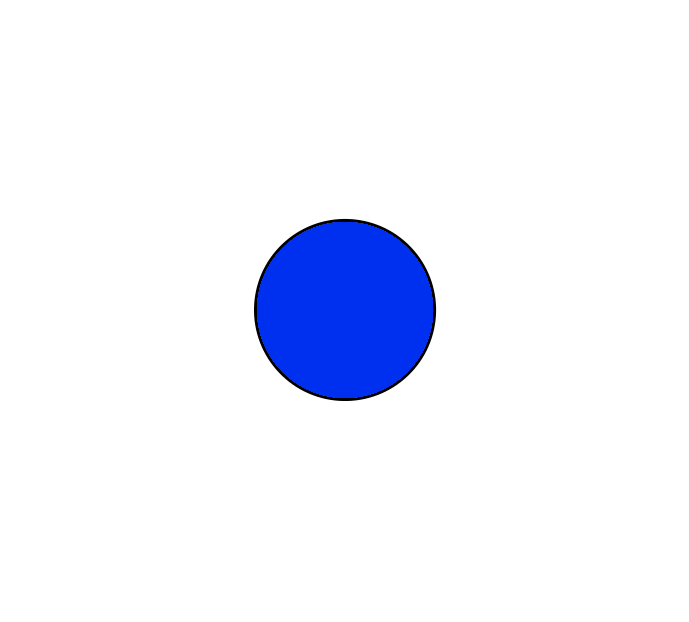
My wife fills the circle perfectly. One solid color, consistent tone, clean edges. She fully understands what's inside that circle. Nothing excessive, nothing missing.
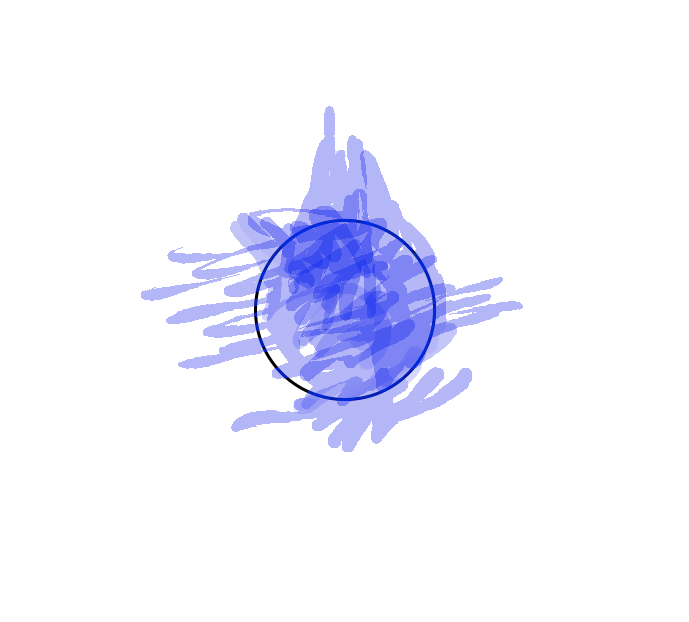
My circle looks different. Some areas are darker where I went deeper, some are lighter where I only skimmed. Some spots might even be missing color entirely. But here's the thing: I smudged over the edges. Sometimes quite a bit. My color bleeds outside the circle into the surrounding paper.
Looking at a single circle in isolation, my approach seems flawed. Obviously. Hers is complete, mine is patchy with weird smudges going nowhere.
Zooming out
Now imagine a larger piece of paper with multiple circles as a metaphor for the plethora of things to learn during a lifetime.
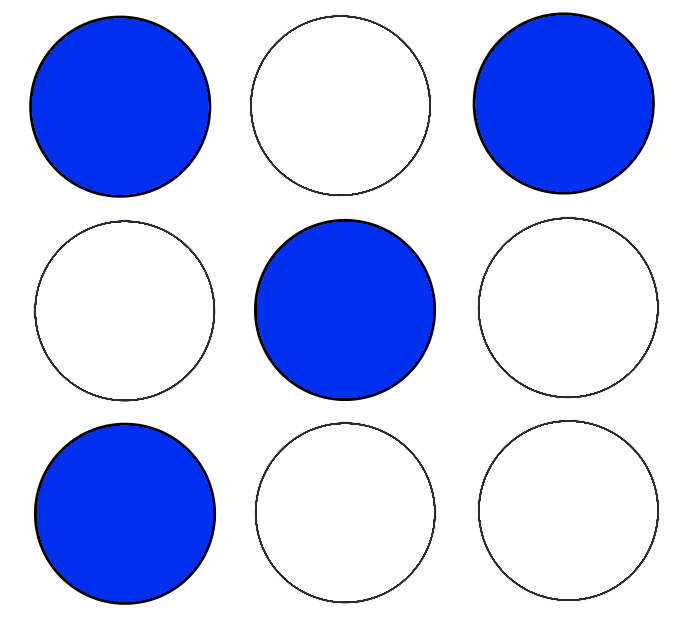
My wife's paper looks pristine. Beautiful, perfectly filled circles with clean white space between them. Each topic mastered independently to perfection.
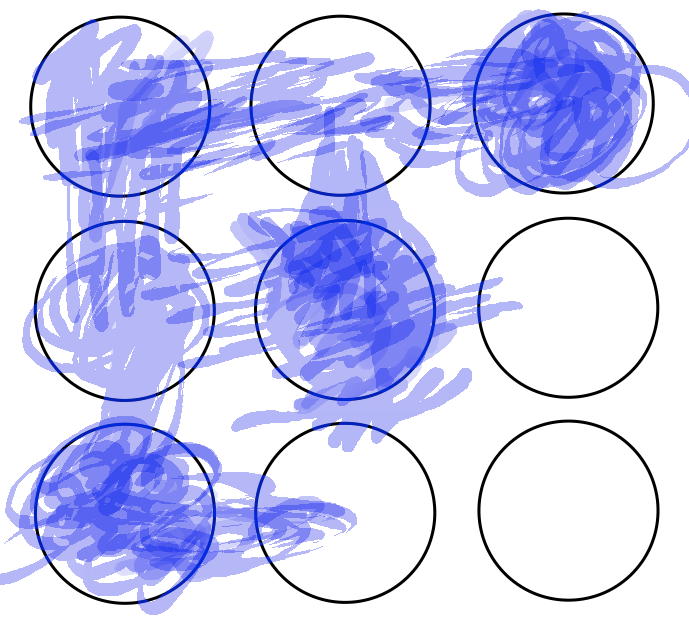
My paper is chaotic. Patchy circles with color bleeding everywhere. But some of my smudges cross into other circles. When I start learning a new topic, parts of it are already colored in from previous tangents. The chaos connects things.
This is ✨ cross-over knowledge ✨. Okay... big words. Most of the time that knowledge is barely good enough to annoy said wife with trivia.
Yet, the more circles I color, the higher the chances I actually learned something that proves useful later. The tangent I went on while studying topic A accidentally gave me a head start on topic B. The forum thread from 2014 mentioned something that suddenly clicks when I encounter topic C three months later.
And that click is really something. The feeling of trivial knowledge falling into place with something else is the feeling I need to associate with learned material that makes information stick.
Chaotic Professionalism
During my career as a Software Engineer, divergent learning was the best trait I could've asked for. Software is such a vast, fast moving field. It's easier to quickly adapt to new things when you do not intend to fill every gap about a certain tech or trend but rather learn the broad strokes of the 'now'.
Then, those magical click-moments are easy to find. Backend, frontend, infrastructure-as-code, architecture, patterns... an endless stream of good-to-knows that ultimately combine into a beautiful picture once you take a step back.
Neither is better
My wife's approach wins when you need complete mastery of one thing. When precision matters. When the edges of the circle are the edges of what you need to know.
My approach wins when domains overlap. When connecting dots matters more than filling them in perfectly. When you don't know yet which circles you'll need to color next.
I spent years thinking my brain was broken because I couldn't learn "properly". Turns out it's just learning differently - building a messy web instead of clean modules. Sometimes that's exactly what you need.